Best Indoor Cat Breeds: 9 Profiles Compared for Home Life
Compare 9 indoor cat breed profiles by activity, grooming, and apartment fit. Learn what indoor cats need and why individual behavior matters more than breed labels.
Updated
If you are comparing best indoor cat breeds, use a breed list to make a shortlist, not to predict how one cat will behave. British Shorthair, Ragdoll, Exotic Shorthair, Selkirk Rex, Persian, American Shorthair, Chartreux, Russian Blue, and Birman profiles in this directory have apartment-fit scores of 4 or 5 out of 5. Their activity and grooming fields still differ, and none guarantees that a cat will thrive in every home.
Indoor living is a daily environment, not a personality label. The useful choice is a cat whose activity, coat care, social needs, and known habits fit the time and space you can provide. Then make the home interesting enough for that individual cat.
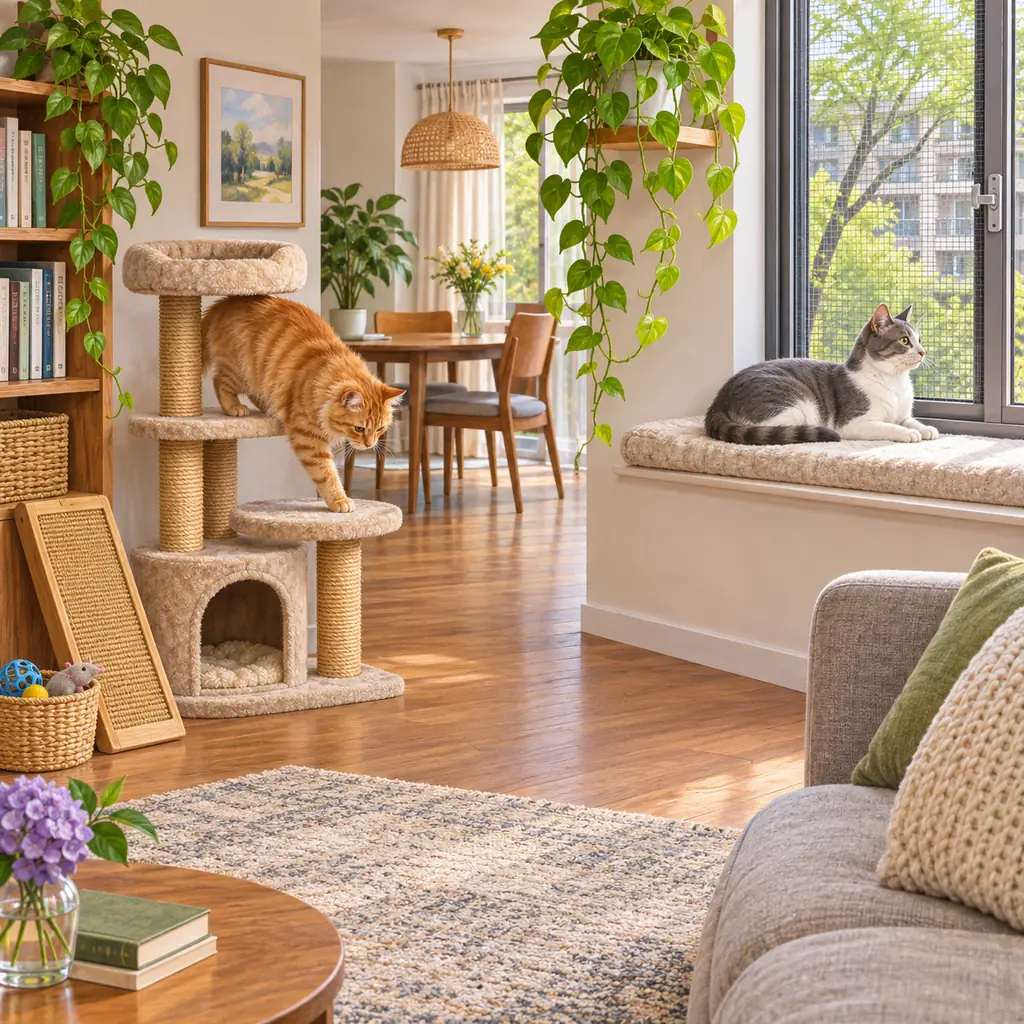
Quick answer: which cat breeds can suit indoor life?
Several profiles in the directory can be reasonable starting points for an indoor-home shortlist. British Shorthair, Ragdoll, Exotic Shorthair, Selkirk Rex, and Persian have apartment-fit scores of 5/5; American Shorthair, Chartreux, Russian Blue, and Birman are rated 4/5. Those are editorial comparison scores, not veterinary assessments or evidence that a breed needs little space.
Compare the profile fields beside the score. A lower-activity cat may need less vigorous play than a more active one, but every cat benefits from movement and choice. A short coat may take less brushing than a dense long coat, but it does not remove the need for play, scratching, company, preventive care, or an individual adjustment period.
9 indoor cat breed profiles compared
The table uses the directory's apartment-fit, activity, and grooming fields. It is not a ranked list of the best cats, and the notes describe planning questions rather than guaranteed breed behavior.
| Breed profile | Apartment fit | Activity | Grooming | What to plan for |
|---|---|---|---|---|
| British Shorthair | 5/5 | Low | Low | A lower activity rating does not replace daily play. Ask how this cat responds to handling and new routines. |
| Ragdoll | 5/5 | Low | Moderate | Budget for regular coat care and interaction; a lower score for activity does not mean a cat prefers long periods alone. |
| Exotic Shorthair | 5/5 | Low | Moderate | Check the individual coat and care routine with its caregiver rather than assuming short hair means no grooming. |
| Selkirk Rex | 5/5 | Low | Moderate | Ask what combing the cat accepts and how its coat behaves through seasonal changes. |
| Persian | 5/5 | Low | High | The low activity field comes with a high grooming field; only shortlist it if frequent coat care is realistic. |
| American Shorthair | 4/5 | Moderate | Low | Plan regular interactive play and provide scratching and climbing choices even with a short coat. |
| Chartreux | 4/5 | Moderate | Low | Include daily movement and a quiet retreat; a moderate activity level still needs an outlet. |
| Russian Blue | 4/5 | Moderate | Low | Keep a predictable routine and allow a retreat while the cat settles into a new home. |
| Birman | 4/5 | Moderate | Moderate | Make room for regular combing and companionship, then confirm the specific cat's habits. |
The score is useful for sorting profiles, not for selecting a cat without a conversation. The apartment-fit directory filter uses the same 4/5 threshold, and the cat breed selector can organize other preferences. Open individual profiles before deciding: two cats with the same score can have different histories, ages, health needs, and comfort with indoor routines.
Indoor fit is not the same as quiet, small, or low-maintenance
Searches often combine several wishes: an indoor cat that is quiet, compact, affectionate, and easy to groom. These are separate questions. A quiet cat may still be active. A small cat may need a lot of interaction. A low-grooming coat does not make a cat independent, and a relaxed cat can still need company and daily enrichment.
Use the site's quiet cat breeds guide for vocality, the low-maintenance cat breeds guide for care workload, and the small cat breeds collection for adult size. The broad guide to choosing a cat breed helps compare those factors with your schedule. A housing decision should not collapse all of them into one breed label.
Make an indoor home work for the individual cat
Indoor cats need chances to move, explore, rest, scratch, and choose when to approach people. Ohio State University's Indoor Pet Initiative describes environmental needs that can be planned around a cat's normal behavior. A useful starting setup includes:
- A vertical route. Offer a stable cat tree, shelves, or other safe raised places. A window perch should not depend on an open or insecure window.
- More than one resting option. Provide both social resting spots and a quiet retreat where the cat can leave interaction.
- Scratching choices. Place stable scratching surfaces near the places the cat sleeps and moves through. Different textures and orientations help you learn what it prefers.
- Daily play and exploration. Use short interactive sessions, rotate toys, and offer food puzzles when appropriate. Let the cat catch the toy at the end of play rather than building frustration.
- A practical litter area. Keep it accessible, quiet, and separate from food and water. The right location matters more than hiding every box out of sight.
- Safe windows and balconies. Check screens, gaps, and balcony access. A picture of a cat at a window is not evidence that the opening is secure.
- A predictable routine. Regular play, feeding, and rest periods make it easier to notice whether the setup is working for that particular animal.
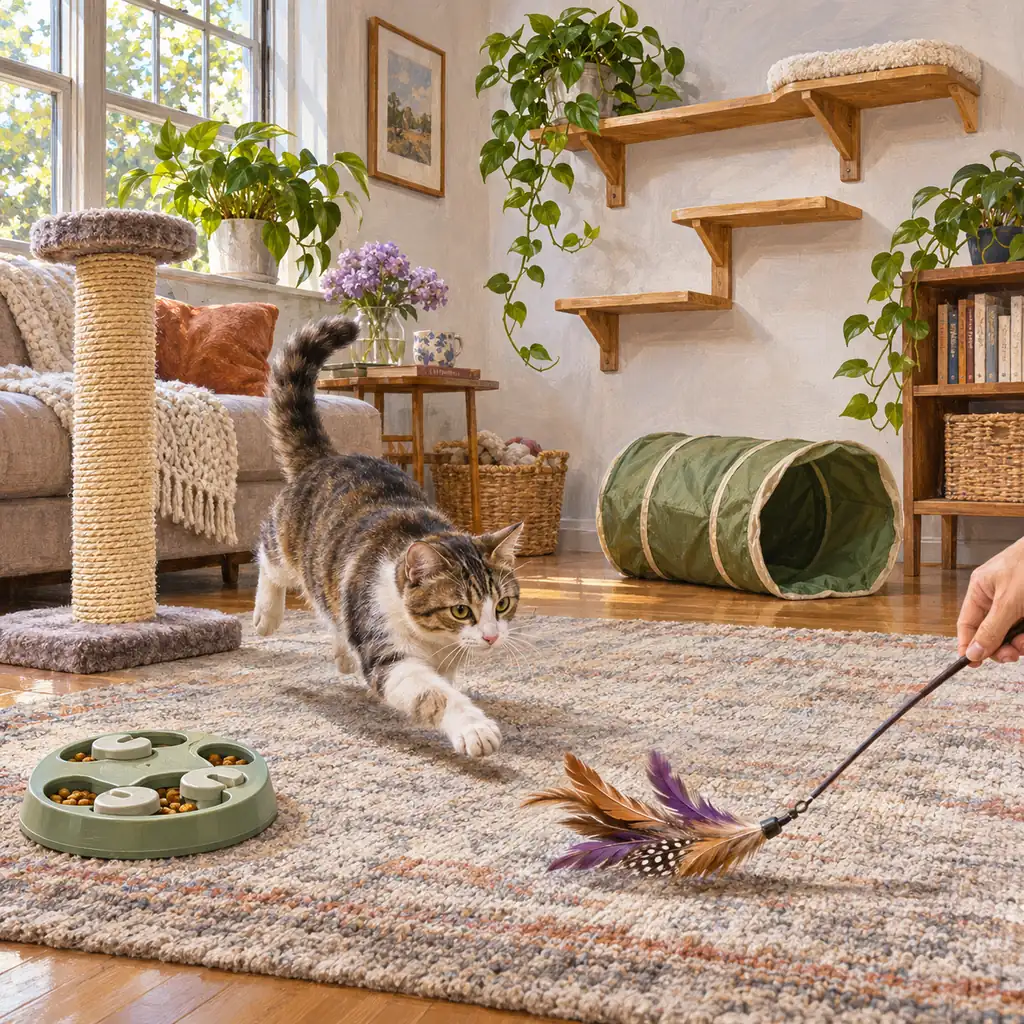
Watch what the cat chooses instead of assuming that every cat wants the same setup. If it repeatedly avoids a perch, toy, or resting area, change the location or type. If a previously settled cat becomes restless or withdraws, ask its caregiver or veterinarian what may have changed rather than blaming the breed.
Apartment cats and indoor cats overlap, but the fit is different
“Indoor” describes where a cat spends its routine; “apartment” adds limits such as floor plan, shared walls, lease rules, and the place available for litter equipment. A spacious apartment can offer vertical routes and separate resting zones. A larger house can still be unstimulating if it has no safe play or retreat options.
Before adopting, measure the spaces you can actually dedicate to cat furniture, scratching, litter, feeding, and separation during an introduction. Check landlord rules and secure windows. If the home is small, prioritize usable vertical space and clear pathways instead of buying bulky equipment that blocks movement.
The phrase best cat breeds for apartments belongs in the same comparison as indoor breeds, but it should not create a separate shortlist page on this site. Use the apartment score as one input, then check how much daily activity, brushing, and companionship you can support. The large cat breed guide also explains why size alone does not determine whether an apartment can work.
Check grooming and company before choosing
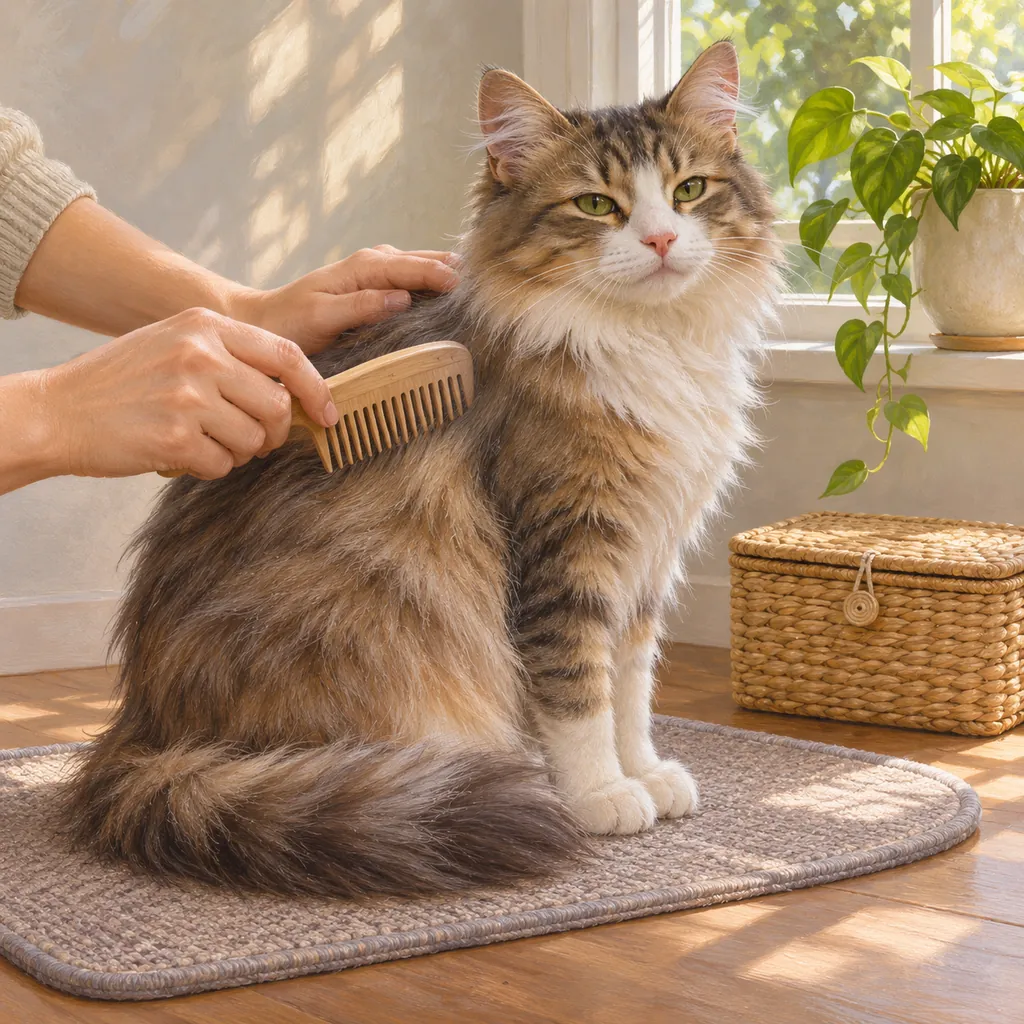
Indoor suitability does not reduce coat care. Persian has a high grooming field in the directory; Ragdoll and Birman are moderate; short-coated profiles such as British Shorthair and Russian Blue are lower. A brush schedule should match the cat's coat and tolerance. Ask the current caregiver what tools are used, how often, and whether the cat is comfortable with handling.
Social needs also vary. Some cats seek company directly; others prefer to share a room without being held. Ask about ordinary behavior during play, rest, visitors, and time alone. A breed description cannot promise that a cat will enjoy being the only pet or that a second pet will solve boredom.
Questions to ask before you choose
Ask for examples from a normal week rather than a broad label such as “easy” or “independent.” Useful questions include:
- What does the cat do when it wants play or attention?
- How does it spend time when no one is home?
- Which toys, climbing spots, and scratching surfaces does it use?
- What grooming routine does it currently accept?
- Has it lived indoors, and how did it adapt to changes in the home?
- What are its known health, behavior, and care records?
- How does it respond to visitors, household noise, and closed doors?
An adult cat in a foster home may have more observable routines than a kitten, although every cat still needs time to adjust. If you adopt a cat that previously spent time outdoors, plan a gradual transition with advice from the current caregiver. Do not use a breed chart to skip a slow introduction or a safe indoor setup.
Frequently asked questions
Are indoor cats happy?
Many cats can live well indoors when they have daily play, places to climb and scratch, comfortable resting spots, and opportunities to make choices. Breed is only one part of the decision; observe the individual cat and plan its environment.
Do indoor cats get bored?
They can become under-stimulated if the day offers little movement, exploration, or interaction. Rotate toys, add safe vertical routes and hiding places, and schedule interactive play that suits the cat.
Are indoor cat breeds the same as apartment cat breeds?
The ideas overlap, but they are not identical. Indoor describes a lifestyle, while apartment fit also depends on floor plan, noise, safe vertical space, litter placement, and housing rules.
Which cat breed is easiest to keep indoors?
There is no universally easiest breed. The directory rates several profiles well for apartment fit, but coat care, activity, social needs, health history, and an individual cat's behavior still matter.
Can a breed predict whether a cat will enjoy living indoors?
No. Breed profiles describe broad tendencies, not a guarantee for an individual animal. Ask the current caregiver about the cat's routine, play, handling, and response to indoor spaces.
Are low-maintenance cat breeds always better indoor cats?
No. Grooming workload and indoor enrichment are different needs. A short-coated cat may still need regular play and company, while a calm long-haired cat may require frequent grooming.
Sources and limitations
For indoor enrichment, see Ohio State University's Indoor Pet Initiative Basic Indoor Cat Needs. For general new-cat planning, Cornell Feline Health Center's Choosing and Caring for Your New Cat is veterinary education material. Breed names and standards vary by registry; the Cat Fanciers' Association breed directory is one source for registry descriptions.
The scores and activity/grooming fields on this site are editorial comparisons. They are not clinical assessments, registry rankings, or promises about a specific cat. Use them to make a shortlist, then ask the shelter, foster caregiver, or responsible breeder about the individual animal and consult a veterinarian about health questions.