Low-Maintenance Cat Breeds: 9 Easier-Care Cats and the Real Trade-offs
Compare low-maintenance cat breeds by grooming, activity, shedding, and routine care. Find an easier-care shortlist without treating any cat as maintenance-free.
Updated
If you are searching for low-maintenance cat breeds, the useful answer is a care comparison, not a promise of a cat that needs nothing. A short coat can reduce brushing time. A moderate activity profile can make a daily routine easier to plan. A predictable, social adult cat can fit a busy household better than a kitten. None of those traits removes litter care, enrichment, health checks, or the need to learn the individual cat's habits.
This guide uses “low maintenance” as a practical household question: which cats may be easier to fit into a repeatable routine when grooming, activity, shedding, and companionship are considered together? The shortlist is a starting point for research. It is not a ranking, a medical claim, or a guarantee that every cat in a breed will be easy to care for.
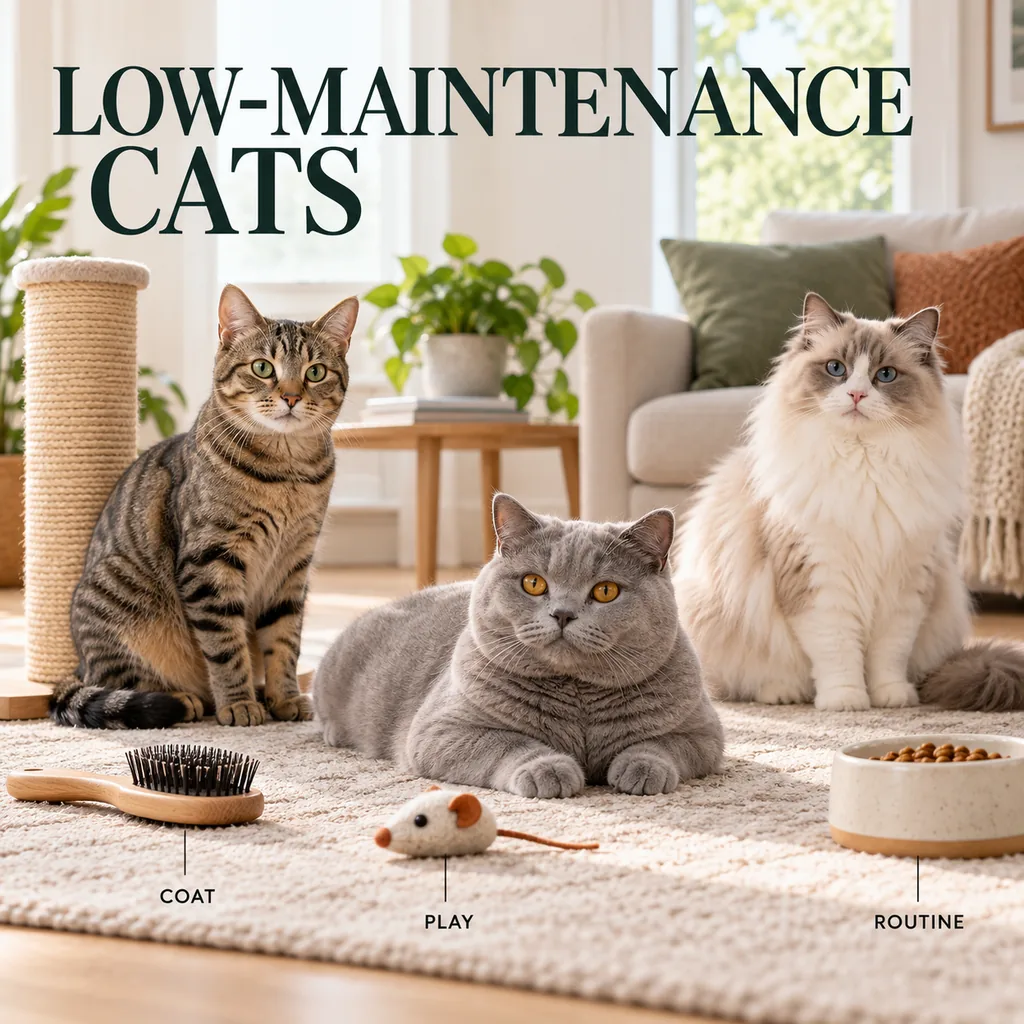
Quick answer: what makes a cat breed low maintenance?
A lower-maintenance profile usually comes from a combination of factors rather than one magic trait:
- Coat work: short or less tangle-prone coats can reduce combing time, but all coats and skin still need observation.
- Activity planning: moderate activity may be easier to schedule than a highly energetic routine, but every cat needs play and environmental enrichment.
- Companionship needs: a cat that settles into predictable company may fit a stable schedule, while a very social cat may need more interaction.
- Health and handling: a breed with a simple coat can still have important health screening, dental, weight, or handling needs.
- Your actual routine: the easiest cat to take care of is the one whose daily and weekly needs you can reliably meet.
The phrase low-maintenance cats should therefore be read as “relatively manageable care,” never “self-sufficient.” Cats hide illness, and a change in appetite, litter habits, grooming, movement, or vocalization deserves attention. Ask a veterinarian about health concerns instead of using a breed list as a diagnosis.
9 low-maintenance cat breeds to compare
The table separates grooming from activity and companionship because a cat can be easy to brush but demanding in another way. The broad descriptions below reflect the directory's editorial fields and common breed descriptions; they are not controlled behavior measurements.
| Breed | Coat and grooming | Activity and companionship | Practical trade-off |
|---|---|---|---|
| American Shorthair | Short, dense coat; usually a straightforward brushing routine | Moderate activity and adaptable household fit | Watch weight and keep regular play instead of assuming a sturdy build needs little care |
| British Shorthair | Short plush coat; regular brushing helps with shedding | Often steadier and less intense in daily activity | A calm style can still become overweight without measured food and movement |
| Russian Blue | Short dense coat; generally low grooming workload | Predictable routines may suit a quieter home, though individuals vary | A cautious cat may need patient introductions and a reliable retreat |
| Burmese | Short coat; low coat maintenance | Social and playful, often seeking active interaction | Easy grooming does not mean low time needs; schedule company and play |
| Siamese | Short coat; simple brushing | Social, intelligent, and often expressive | A highly interactive, vocal companion may not suit a household seeking quiet |
| American Curl | Short or long coat depending on the individual; check the actual coat | Curious and moderate in activity | Ear shape needs gentle observation; do not treat appearance as a care shortcut |
| Cornish Rex | Fine, short coat; skin and warmth deserve attention | Playful and active | Less loose fur can come with more enrichment, warmth, and handling questions |
| Devon Rex | Fine coat; routine skin and ear checks matter | Curious, playful, and people-oriented | A small grooming burden may be offset by a high need for interaction |
| Sphynx | Little visible hair, but regular skin care and bathing may be needed | Social, warm-seeking, and active | Hairless does not mean hypoallergenic or maintenance-free; plan skin, temperature, and health care |
The first three profiles are often the most practical starting points when you mean “less brushing and a steadier daily rhythm.” Burmese, Siamese, Devon Rex, and Sphynx can be easier to groom while requiring more social time or skin care. That difference is why a simple list of “easiest cat breeds” can mislead.
American Shorthair: a practical short-coat baseline
American Shorthairs can be a useful baseline for someone who wants a named breed with a short, dense coat and moderate household activity. A weekly brushing routine may be manageable for many homes, but it is still worth asking the caregiver how the individual cat handles handling. Food portions and interactive play matter because a solid build can hide gradual weight gain.
Use the American Shorthair profile to compare size, vocality, activity, and grooming rather than assuming the short coat answers every care question.
British Shorthair: steady routine, real weight planning
British Shorthairs are often considered a calmer, lower-intensity option. Their dense plush coat is not difficult to understand, but regular brushing still helps remove loose hair. A cat that spends much of the day resting needs measured meals, movement opportunities, and a veterinarian's body-condition guidance. Calm is not the same as inactive or risk-free.
The British Shorthair profile is useful when comparing a steady indoor rhythm with the needs of a more athletic breed.
Russian Blue: simple coat, patient social setup
The Russian Blue's short coat can make grooming easier to schedule. Some individuals prefer predictable routines and may take time to relax around unfamiliar people. That can suit a quiet, consistent home, but it means the household should provide a retreat and avoid rushing introductions. Ask a foster caregiver how the cat behaves with visitors, carriers, and changes in routine.
Read the Russian Blue profile alongside the quiet cat breeds guide if sound and household rhythm are part of your decision.
Burmese and Siamese: easy coat, higher interaction
Burmese and Siamese cats show why grooming alone cannot define low maintenance. Both have short coats, yet they may be social, playful, and communicative. A person who works from home and enjoys frequent interaction may find that rewarding. A household that wants a cat to entertain itself for long periods may find the same trait demanding.
Compare the Burmese profile and Siamese profile, then ask how the specific cat asks for play, food, and company. “Easy to brush” is only one line in the care plan.
Curly-coated and hairless profiles: less hair is not less care
Cornish Rex and Devon Rex profiles have fine coats that can appear low-effort, but skin, ears, warmth, and enrichment remain relevant. Sphynx cats have little visible hair, yet they may need regular skin care and a warm, comfortable environment. A hairless cat is not automatically hypoallergenic; allergens can come from skin and saliva, not only loose fur. The site's hypoallergenic cat breeds collection explains why allergy claims need caution.
Meet the individual cat, ask about the current care routine, and seek veterinary advice when skin, ear, weight, or breathing concerns appear.
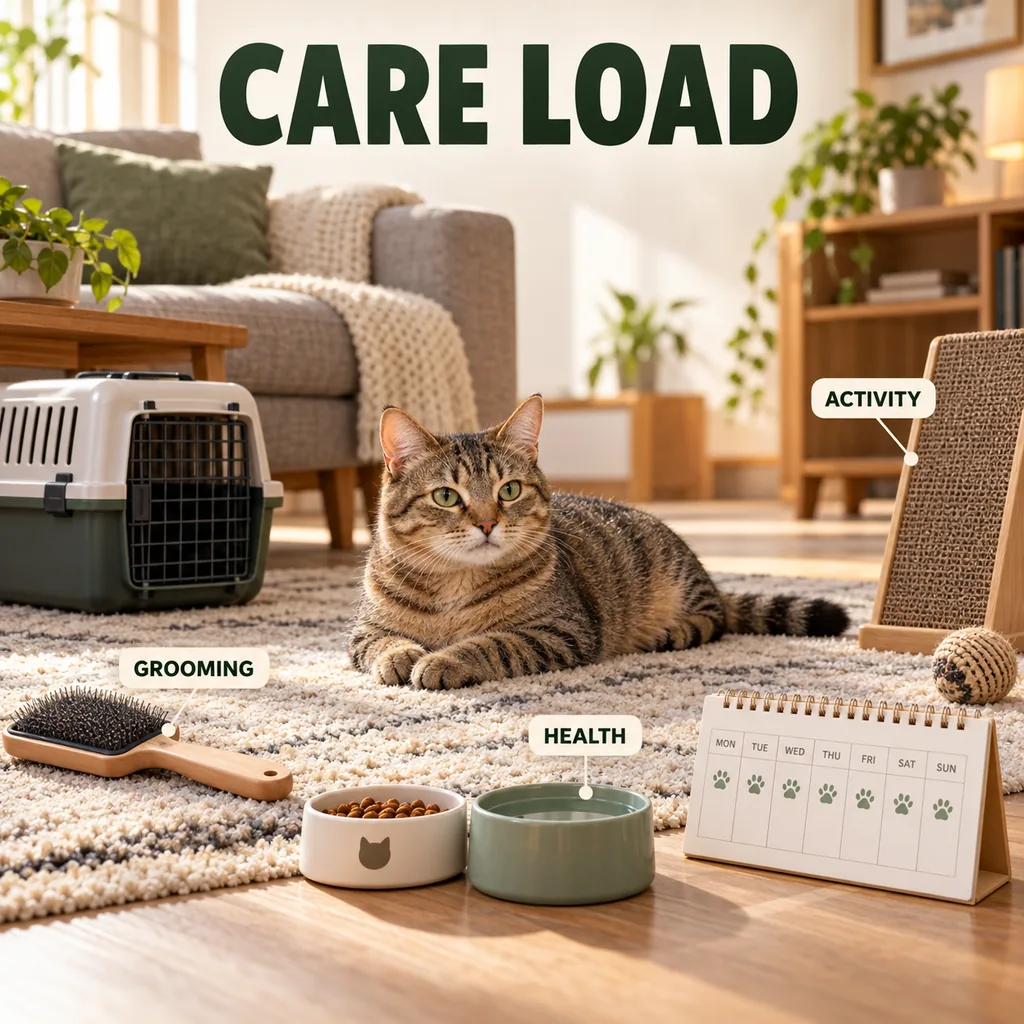
A low-maintenance routine you can actually repeat
Before choosing a breed, test the routine on paper. A realistic plan is more useful than an idealized description.
Daily: food, litter, movement, and observation
Feed the diet and portion recommended for the cat's age, body condition, and health. Refresh water and keep the litter area clean. Add play, scratching, climbing, or puzzle feeding that fits the cat's ability and preferences. During those ordinary tasks, notice appetite, mobility, breathing, coat condition, stool, urine, and social behavior. You do not need to diagnose a change, but you do need to notice it.
Several times a week: coat and handling practice
Brush at a pace the cat accepts. Short-haired cats may need less combing than long-haired cats, but a quick check can reveal mats, skin irritation, parasites, or a new sensitivity to touch. Practice calm carrier and nail-handling steps in small sessions. Stop when the cat becomes distressed and ask a veterinarian or qualified groomer about pain, mats, or sudden handling changes.
If a full coat is part of your shortlist, use the site's fluffy cat breeds guide to compare long-haired profiles before treating a calm temperament as a low-maintenance promise.
Weekly: reset the environment
Wash bedding as needed, inspect scratching posts and climbing surfaces, rotate toys, and check that litter boxes and carriers still fit the adult cat. Enrichment does not have to be expensive: a stable perch, a safe paper bag, a food puzzle, and short interactive play can support a predictable indoor routine. Never use unsafe strings, toxic plants, or unstable furniture as improvised toys.
On schedule: preventive care
Keep veterinary visits, vaccinations, parasite prevention, dental care, and weight checks on the schedule recommended for the individual cat. Low-maintenance is not a reason to postpone care. Ask a veterinary professional which signs require urgent attention, especially changes in breathing, eating, urination, pain, or activity.
Low maintenance versus low shedding, quiet, or beginner-friendly
These labels overlap in everyday conversation but describe different questions:
| If you care most about... | Compare... | Do not assume... |
|---|---|---|
| Less brushing | Coat length, density, and matting tendency | Low brushing means low allergens |
| Fewer vocal interruptions | Vocality and individual routine | Quiet means low energy or low care |
| A first-cat fit | Time, support, handling, health, and temperament | A beginner score guarantees easy care |
| Apartment living | Activity, enrichment, litter setup, and noise | A small home automatically fits a calm cat |
| Less visible fur | Shedding and cleaning routine | Hairless or low-shedding means hypoallergenic |
The cat breed selector can organize these fields, while the cat breed comparison tool lets you examine two profiles side by side. Use both as research aids, then ask a shelter, foster caregiver, or responsible breeder for the cat's actual routine.
Common mistakes when looking for an easier-care cat
- Choosing a coat instead of a whole routine. A short coat may save brushing time while a social or athletic cat needs more play.
- Treating “low maintenance” as “low cost.” Food, litter, veterinary care, insurance or emergency savings, grooming tools, and replacement equipment still cost money.
- Assuming a breed description predicts an individual. Age, health, socialization, previous home, and environment can change behavior.
- Using low shedding as an allergy promise. No breed is guaranteed to cause no reaction. Discuss symptoms with an allergy clinician and spend time with the specific cat.
- Forgetting the adult stage. A kitten's coat, size, and activity can change. Ask how the care plan may look as the cat grows.
- Skipping enrichment. A cat that is easy to brush still needs choices for play, scratching, hiding, and rest.
Frequently asked questions
What are the best low-maintenance cat breeds?
There is no universal winner. American Shorthair, British Shorthair, and Russian Blue can be sensible short-coat starting points, while Burmese, Siamese, Devon Rex, and Sphynx show that easy grooming may come with higher social, skin, or enrichment needs. Compare the whole routine and the individual cat.
Are low-maintenance cats easy to take care of?
Some cats may fit a simpler schedule, but every cat needs reliable food and litter care, daily observation, enrichment, preventive veterinary care, and a safe home. “Easy” is relative to your time, experience, support, and the cat's actual needs.
Which low-maintenance cat breeds shed the least?
Shedding varies by individual, season, coat, and health. Short hair can make cleaning easier, but it does not prove low shedding or low allergens. Ask about the specific cat's coat and spend time with it before making an allergy-related decision.
What is the easiest cat breed for a first-time owner?
There is no single easiest breed. First-time owners should compare daily grooming, play, companionship, handling, health planning, and access to support. The beginner-friendly collection is a reading list, not a guarantee.
Are low-maintenance cats good for apartments?
Many can be comfortable in apartments when they have clean litter areas, safe vertical space, daily play, a retreat, and a predictable routine. Compare activity and vocality separately; a low-grooming cat can still be active or talkative.
How much work does a low-maintenance cat still need?
Plan for daily feeding, water, litter care, interaction or enrichment, and observation; regular brushing or skin checks; scheduled veterinary and dental care; and backup care during travel. The workload may be manageable, but it never disappears.
Sources and limitations
Breed organizations describe common traits rather than guarantees. The Cat Fanciers' Association breed directory and The International Cat Association breed directory are useful starting points for registry context. For general care and choosing a new cat, see Cornell Feline Health Center's choosing and caring for a new cat guide. For allergy questions, use a qualified allergy clinician; breed labels and shedding descriptions cannot replace medical advice.
The shortlist and care categories on this site are editorial comparison aids. Registry definitions, individual behavior, health needs, and grooming workload can vary. Use the page to prepare better questions, then evaluate the actual cat and ask a veterinarian about health, nutrition, skin, dental, or behavior concerns.