Fluffy Cat Breeds: 9 Long-Haired Cats and Their Grooming Needs
Compare nine fluffy cat breeds by coat, grooming workload, shedding, activity, and home fit before you choose a long-haired companion.
Updated
If you are searching for fluffy cat breeds, the useful answer is a coat-and-routine comparison, not a beauty ranking. A full ruff or plume-like tail can make a cat look dramatically fluffy, but the practical questions are how often the coat tangles, how much loose hair you can manage, and whether the cat's activity and size fit your home.
This guide compares nine long-haired or semi-longhaired profiles in the directory. Use it to make a shortlist, then treat the individual cat's coat condition, behavior, health history, and grooming tolerance as more important than a breed stereotype.
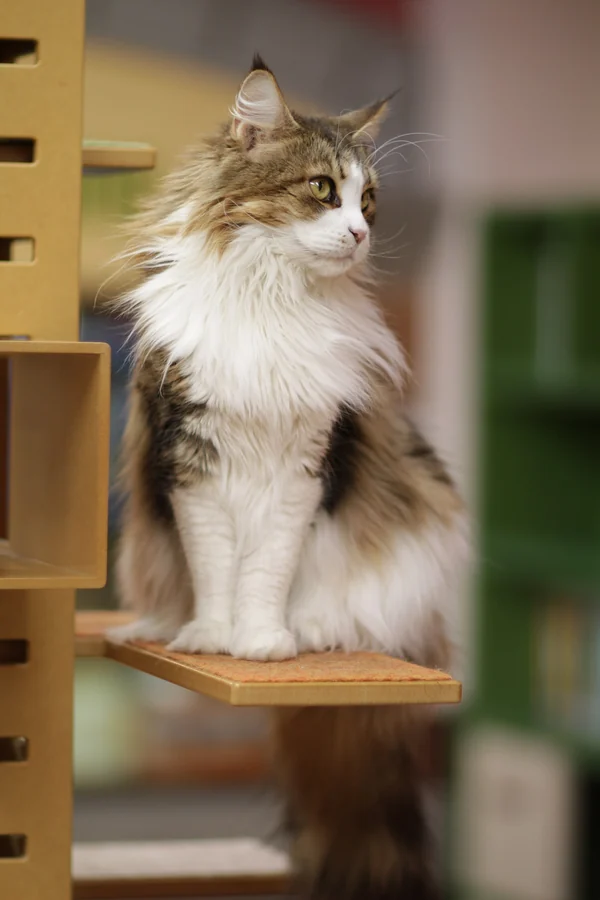
Quick answer: what makes a cat look fluffy?
“Fluffy” is a useful everyday description, not a registry class. Long guard hairs, a dense undercoat, a broad ruff, feathering on the legs, or a plume-like tail can all create volume. A semi-long coat may look soft and full while needing less work than a very dense double or triple coat. Conversely, a short plush coat can feel thick without being a long-haired coat.
The directory's coat fields are comparison aids. They do not predict the exact coat of every kitten, how much an adult will shed, or whether a cat will accept a brush. If you are choosing between profiles, compare grooming, shedding, activity, and size together rather than using the word “fluffy” as a shortcut for easy, calm, or allergy-safe.
9 fluffy cat breeds compared
The table is a starting point for a shortlist. “High” grooming means the household should plan for frequent, patient coat care; it does not mean every cat needs the same number of sessions.
| Breed | Coat in this directory | Grooming and shedding | Practical fit to check |
|---|---|---|---|
| Maine Coon | Long, shaggy, water-resistant | High grooming; high shedding | Large equipment, vertical space, and regular combing |
| Norwegian Forest Cat | Long, weather-resistant double coat | High grooming; high shedding | Combing behind the legs and around the ruff; climbing |
| Ragdoll | Silky semi-long coat | Moderate grooming; moderate shedding | A relaxed routine still needs play and tangle checks |
| Ragamuffin | Full silky semi-long coat | High grooming; high shedding | Weight-aware feeding and several combing sessions each week |
| Persian | Long, dense coat | High grooming; high shedding | Daily combing, facial care when needed, and heat awareness |
| Birman | Silky semi-long coat | Moderate grooming; moderate shedding | Check the ruff and hindquarters for knots |
| Siberian | Long, triple-layer coat | High grooming; high shedding | Seasonal coat changes, sturdy climbing, and active play |
| British Longhair | Dense, plush double coat | High grooming; high shedding | Several combing sessions each week and measured activity |
| Turkish Angora | Fine, silky single coat | Moderate grooming; moderate shedding | Athletic enrichment and weekly combing, more during shedding |
Maine Coon and Norwegian Forest Cat: volume with a large body
The Maine Coon profile combines a long shaggy coat with a listed adult range of 10–25 lb. Its ruff and tail create the classic fluffy silhouette, but the size changes the practical plan: choose a carrier, litter tray, scratching post, and climbing furniture that will remain comfortable as the cat grows. The directory describes regular combing several times a week and daily interactive play.
The Norwegian Forest Cat profile is listed at 9–18 lb with a weather-resistant double coat. Pay attention to the areas behind the legs and around the ruff, where loose hair can form knots. A calm base with safe vertical space is more useful than a large empty floor area.
Ragdoll, Ragamuffin, and Birman: semi-long coats still need a plan
The Ragdoll profile lists a silky semi-long coat, moderate shedding, and moderate grooming. Its relaxed reputation should not be read as a promise that every cat will enjoy being held or brushed. Short, predictable sessions and regular play can work better than infrequent, stressful grooming.
The Ragamuffin profile has a full semi-long coat and a 10–20 lb adult range in this directory. Its grooming workload is high, so a household should budget time for combing even if the cat is gentle. Keep feeding measured and provide movement; a soft coat does not remove weight-management needs.
The Birman profile is a medium-sized, color-point cat with a silky semi-long coat. Several combing sessions each week and checks of the ruff and hindquarters are practical. Its people-focused reputation may suit a home that can provide regular company, but the individual cat's behavior still decides whether handling is comfortable.
Persian and British Longhair: dense coats need consistent upkeep
The Persian profile lists a long, dense coat and high grooming. Daily combing, gentle facial checks when needed, and attention to heat and breathing comfort matter more than the breed's plush appearance. Flat-faced lines can have additional health considerations, so choose health-focused care and involve a veterinarian when concerns appear.
The British Longhair profile combines a broad build with a dense plush double coat. Several combing sessions each week may be needed, with extra attention during shedding seasons. Its low activity field does not mean no exercise: short, regular play and weight-aware feeding are still part of the routine.
Siberian and Turkish Angora: different ways to be fluffy
The Siberian profile has a long triple-layer coat and seasonal shedding. A household that likes a very full coat should also be ready for coat changes, more frequent combing, and daily climbing or interactive play. No breed profile can guarantee that an individual Siberian will be comfortable for a person with allergies.
The Turkish Angora profile has a fine, silky single coat and a smaller 5–10 lb listed range. It may look airy rather than heavily woolly, yet it is still an athletic, intelligent cat that needs vertical space and active engagement. Weekly combing is a starting point, not a fixed rule for every season or individual.
Small fluffy cat breeds: size does not cancel coat care
People often add “small” to a fluffy-cat search because they want a full coat without the equipment needs of a very large cat. That is a reasonable filter, but it can create a care mismatch if size becomes the only decision. A small cat can still have a dense undercoat, dislike handling, or shed heavily.
Use the small cat breeds collection to check adult size, then open the individual profile and compare coat length, grooming, activity, and vocality. The cat breed selector can organize those fields, but it cannot predict how a specific cat will respond to combing or a busy household.
A realistic grooming routine for a fluffy cat
Start with a calm, short session and reward cooperation. Work in the direction of hair growth, use a tool suited to the coat, and stop before the cat becomes distressed. A practical routine includes:
- A quick daily check. Look at the armpits, behind the legs, the ruff, belly, and tail base. Feel for small tangles before they tighten.
- Regular combing. Semi-long coats may need several sessions a week; dense long coats may need daily work. Seasonal shedding can change the schedule.
- A mat rule. Do not pull hard on a tight mat or cut close to the skin with household scissors. Ask a qualified groomer or veterinarian for help when a mat is close to the skin, extensive, or painful.
- A home plan. Keep a washable resting area, a suitable carrier, and litter equipment that the cat can enter comfortably. Loose hair is easier to manage when the cat has stable places to rest.
- A health check. Red skin, bald patches, sudden coat changes, pain, or a new refusal to be handled deserve veterinary attention rather than a stronger brush.
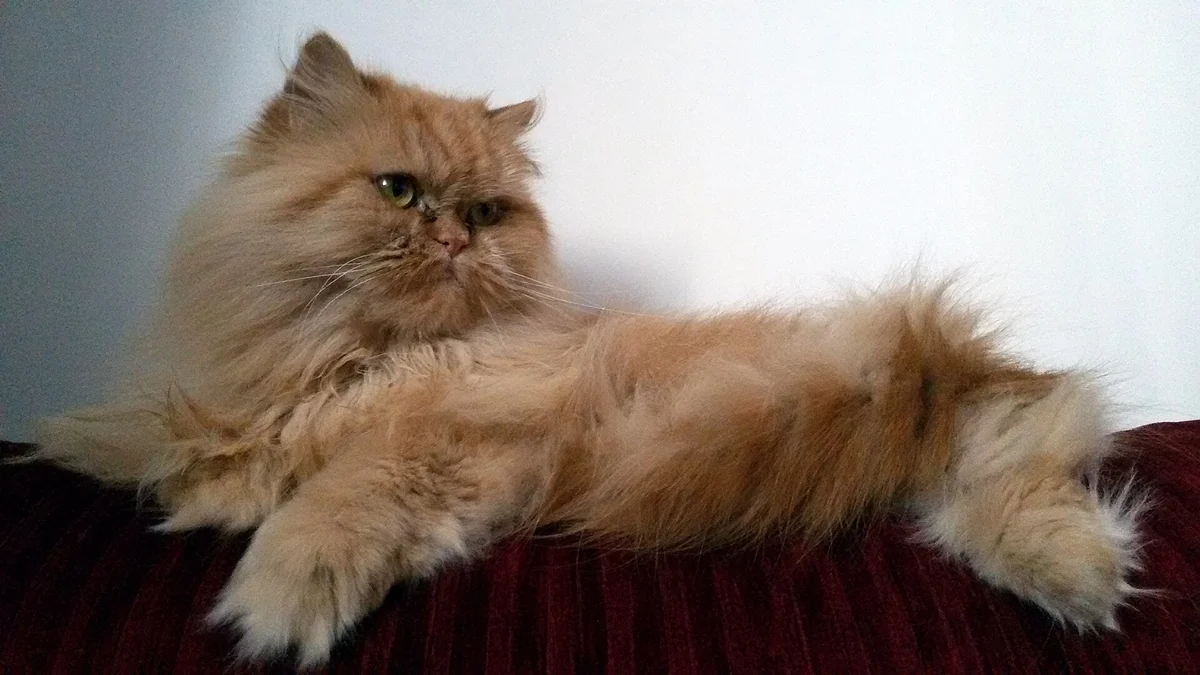
Fluffy is not the same as low-maintenance or hypoallergenic
A long coat can be beautiful and still be a substantial daily commitment. Compare this guide with the site's low-maintenance cat breeds guide before assuming that a calm face or a quiet home style means easy care. The quiet cat breeds guide answers a sound-related question, not a coat question.
Shedding also does not tell you whether a cat will trigger an allergic reaction. The site's hypoallergenic cat breeds collection explains why no breed can promise zero allergens. Spend time with the actual cat, clean the home realistically, and consult an allergy clinician if reactions are a concern.
FAQ
Are fluffy cat breeds high maintenance?
Many need more combing and mat checks than short-haired cats, but the exact workload depends on coat density, age, season, and the individual cat. Use grooming and shedding fields as a starting point, then ask the caregiver what the current routine looks like.
What is the fluffiest cat breed?
There is no universal winner. Maine Coon, Norwegian Forest Cat, Persian, and British Longhair all create a full-coated look in different ways. A registry may describe a coat differently from another registry, and an individual cat may have less or more volume than a typical photograph suggests.
Are fluffy cat breeds hypoallergenic?
No breed guarantees an allergy-free home. Allergens are associated with skin, saliva, and other proteins, not simply with visible fur. Treat allergy questions as a personal health matter and seek professional advice.
Which small fluffy cat breeds are easier to groom?
Start with coat density and grooming tolerance, not body size. A fine single coat may be simpler to comb than a dense undercoat, but the cat's behavior and the household's routine still matter. Compare the profiles in the small cat breeds collection.
Summary
The best fluffy cat breed is the one whose coat, body size, activity, and handling needs you can support every day. Use the nine profiles above to make a shortlist, use the breed selector to compare fields, and then ask about the individual cat's coat history, grooming routine, health records, and behavior. For registry background, compare the CFA breed directory, TICA breed information, and FIFe breed list in a new tab. For general care guidance, Cornell Feline Health Center's choosing and caring for a new cat guide is a useful veterinary education source. These references support questions to ask; they do not replace an examination or an assessment of the specific cat.