Large Cat Breeds: 9 Big Domestic Cats Compared by Size and Care
Compare 9 large cat breeds by adult weight, coat care, activity, and home fit. Use size as a planning clue, not a promise about personality or health.
Updated
If you are searching for large cat breeds, start with the practical answer: this directory currently marks nine profiles as Large, including Maine Coon, Ragdoll, Ragamuffin, Siberian, Turkish Van, Norwegian Forest Cat, British Shorthair, British Longhair, and Persian. Their listed adult ranges run roughly from 7 to 25 lb, but those numbers overlap and do not predict the exact size, personality, or health of an individual cat.
The best large domestic cat for your home is the one whose adult equipment, grooming, activity, and veterinary needs you can support. A big frame can change the size of the carrier and litter box you need, while a long coat or high activity level can matter more to your daily routine than the scale number itself.
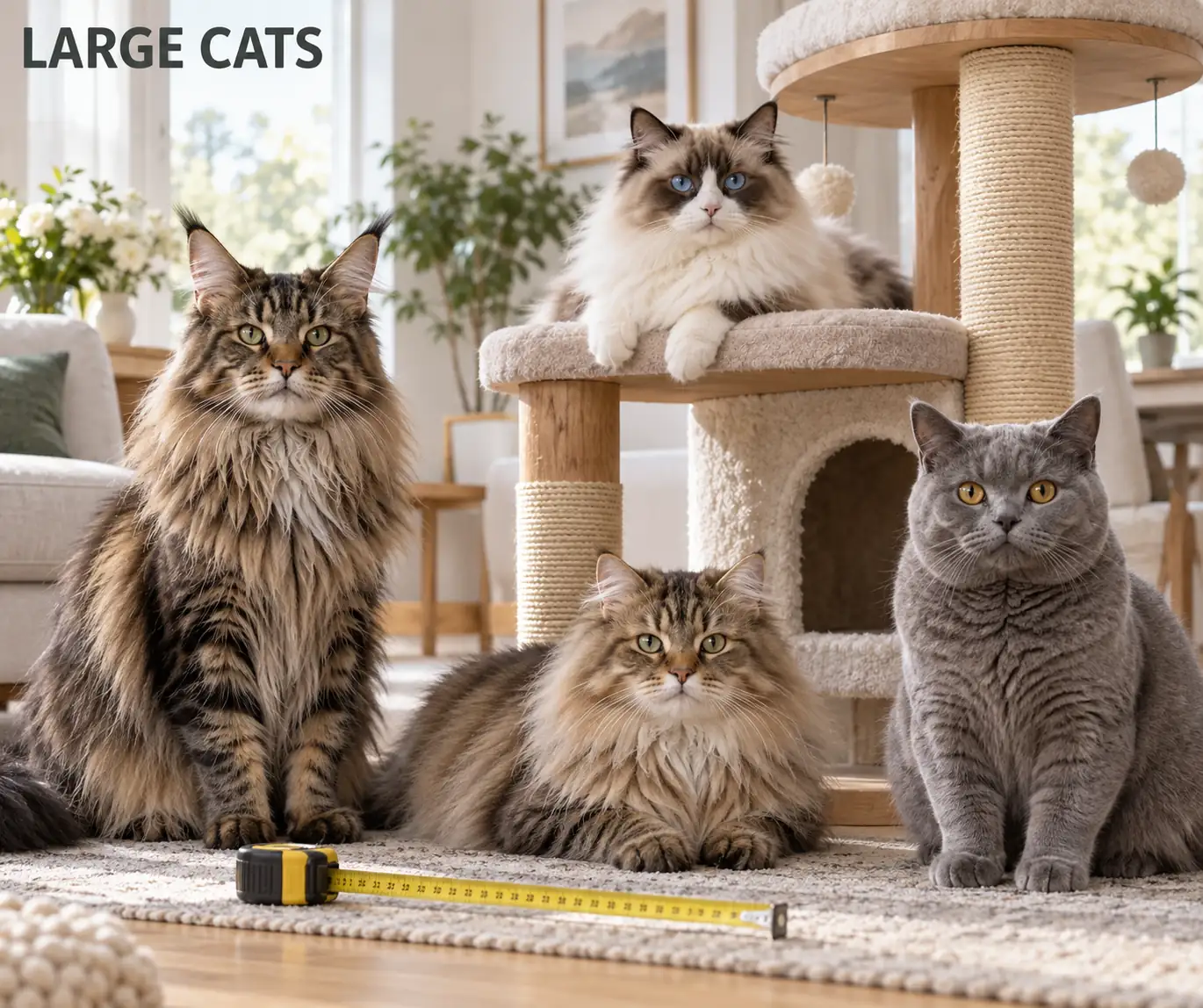
Quick answer: which large cat breeds are worth comparing?
For a broad shortlist, compare Maine Coon, Ragdoll, Ragamuffin, Siberian, Turkish Van, Norwegian Forest Cat, British Shorthair, British Longhair, and Persian. The first five reach the higher end of this directory's weight ranges. British Shorthair and Persian can have a substantial build without the same activity or coat profile as an athletic forest breed. British Longhair combines a large frame with a dense coat that needs more upkeep.
Treat these as starting points, not a promise that one breed will be the biggest, calmest, or easiest. Breed organizations describe common traits, and registry definitions can differ. When you meet a particular cat, ask its caregiver about adult weight history, movement, grooming tolerance, appetite, and the equipment it already uses.
What counts as a large domestic cat?
There is no universal cutoff that every registry uses for the phrase large domestic cat breeds. This site's editorial size field is a comparison aid built from adult weight ranges and breed descriptions. It is not a veterinary diagnosis, a show standard, or a guarantee that every cat in a breed will reach the upper number.
Weight is also not the same as healthy body condition. A muscular cat and an overweight cat may show similar numbers on a scale. Ask a veterinarian to assess body condition and growth, especially for kittens. A kitten's current size cannot reliably predict its adult frame without considering age, parents, nutrition, and health.
The phrase big cat breeds can create a second problem: in wildlife writing it often means lions, tigers, leopards, and related wild cats. The rest of this page uses it only as a casual synonym for large domestic cat breeds. The care and safety advice here is for companion cats living with people.
Large cat breeds compared by adult weight and care
| Breed | Listed adult range | Coat and grooming | Activity and home planning |
|---|---|---|---|
| Maine Coon | 10-25 lb | Long coat; high grooming | Large carrier, sturdy vertical space, regular play |
| Ragdoll | 10-20 lb | Long coat; moderate grooming | Room for a big resting area and calm daily company |
| Ragamuffin | 10-20 lb | Long coat; high grooming | Weight-aware feeding, brushing, and durable furniture |
| Siberian | 8-20 lb | Long coat; high grooming | Seasonal shedding, climbing, and interactive play |
| Turkish Van | 9-20 lb | Long coat; moderate grooming | Athletic enrichment and secure climbing |
| Norwegian Forest Cat | 9-18 lb | Long coat; high grooming | Strong scratching posts and space to climb |
| British Shorthair | 7-17 lb | Short coat; low grooming | Monitor weight and provide steady, moderate movement |
| British Longhair | 8-18 lb | Long coat; high grooming | Frequent combing and equipment sized for a broad body |
| Persian | 7-16 lb | Long coat; high grooming | Daily face and coat checks plus gentle indoor play |
The ranges are the values used in this site's profile data, not a promise of a breed-wide average. They are useful for shopping and planning: a 20 lb upper estimate suggests that a small kitten carrier or narrow litter tray may become impractical. They should not be used to restrict food or exercise without veterinary advice.
Breed profiles: size is only one part of the decision
Maine Coon
The Maine Coon has the widest upper range in this directory at 25 lb. That makes it a natural answer for largest domestic cat breeds, but the practical question is whether your home can support a large, longhaired cat. Plan for a strong scratching post, a carrier with enough turning room, regular combing, and daily opportunities to climb and play. Read the Maine Coon profile for its activity, vocality, and health notes.
Ragdoll
Ragdolls are listed at 10-20 lb with a long coat and moderate grooming needs. A larger, relaxed cat still needs an appropriately sized litter box, secure transport, and a place where it can stretch without being handled constantly. Their calm reputation should not be used as a guarantee that every Ragdoll will enjoy being carried. Compare the Ragdoll profile with the individual cat's behavior.
Ragamuffin
Ragamuffins share a large 10-20 lb range and a full semi-long coat. Their size and coat make weight-aware feeding and consistent combing important parts of the plan. If you like a companionable cat but cannot maintain a grooming routine, a shorter-coated profile may fit better. The Ragamuffin profile explains its care fields and health questions.
Siberian
Siberians are listed at 8-20 lb and have a dense, seasonal coat. Their activity is moderate, yet they still benefit from vertical space and interactive play. A home that can accommodate a large cat but cannot manage frequent shedding may need a different shortlist. The Siberian profile also cautions that no breed is guaranteed allergy-safe.
Turkish Van
The Turkish Van is a large, athletic profile with a 9-20 lb range. Secure climbing, supervised exploration, and regular play matter more than simply having a large floor area. Their semi-long coat needs routine combing, and interest in water varies by individual. See the Turkish Van profile before treating a common breed story as a promise.
Norwegian Forest Cat
Norwegian Forest Cats are listed at 9-18 lb with a long coat and high grooming needs. Their build makes stable furniture and high, safe resting spots useful. Check whether your budget and schedule allow regular combing and replacement of sturdy scratching surfaces. The Norwegian Forest Cat profile provides a better care picture than the size label alone.
British Shorthair
British Shorthairs have a 7-17 lb range and a dense short coat. They may suit someone who wants a substantial cat without daily long-coat grooming, but a lower activity level still calls for measured feeding and routine movement. Their profile notes a steady style rather than a promise of constant lap contact. Compare the British Shorthair profile with your household expectations.
British Longhair
British Longhairs are listed at 8-18 lb and combine a broad build with a dense long coat. Their low activity level does not eliminate grooming; several combing sessions each week may be needed, especially during seasonal shedding. Choose furniture that supports the cat's weight and give it gentle play. The British Longhair profile explains why size and coat care need separate decisions.
Persian
Persians are listed at 7-16 lb, so they may be smaller than the largest forest breeds while still having a substantial body. Their high grooming needs and flat-faced health considerations deserve more attention than an impressive photo. Daily face and coat checks, comfortable indoor temperatures, and veterinary guidance are part of responsible care. Read the Persian profile before choosing based on appearance.
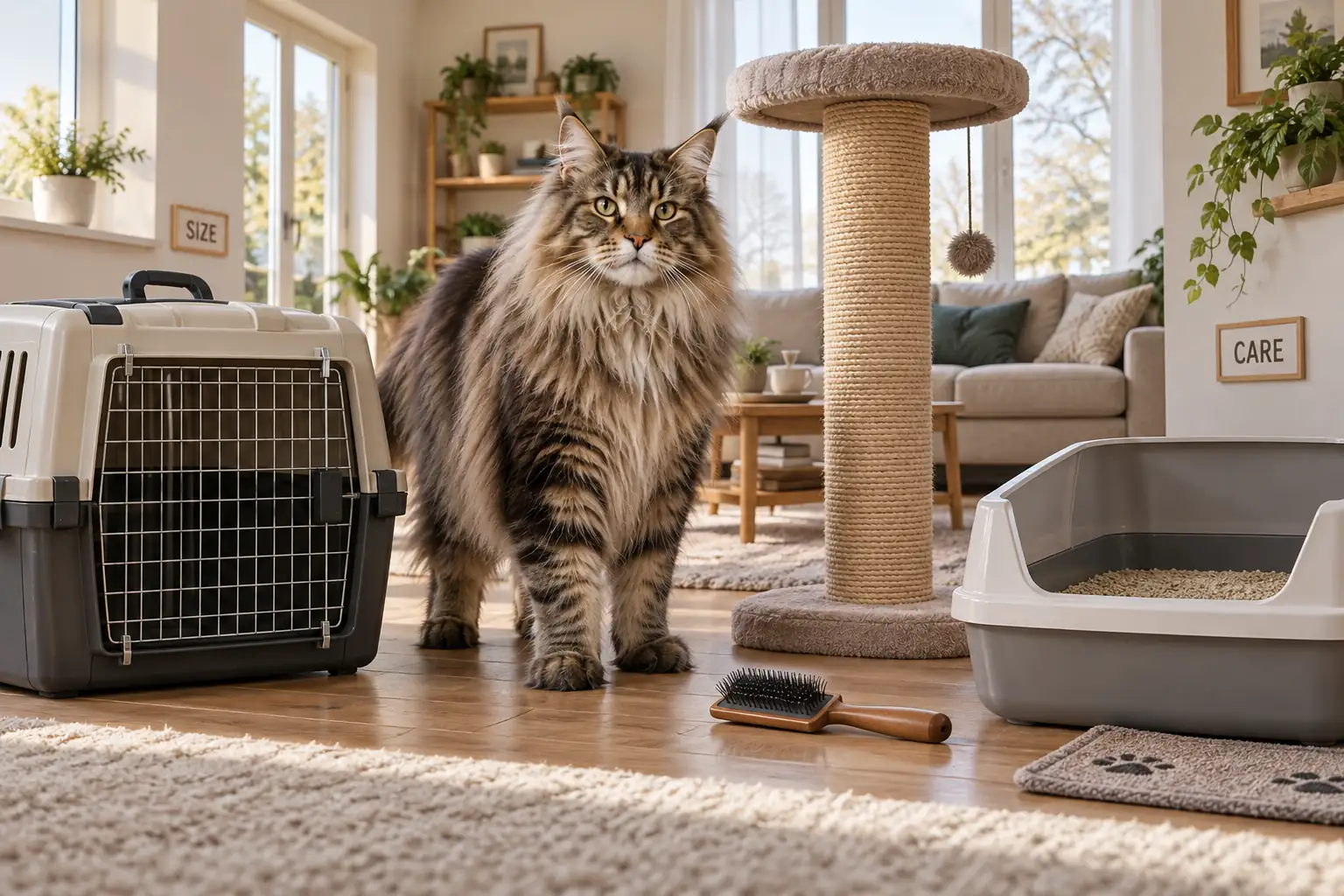
Large-cat care checklist before you commit
Measure the equipment, not just the cat
Choose a carrier in which the adult cat can turn around and sit naturally. A litter box should let the cat enter, turn, and dig without its body pressing against the sides. Scratching posts and climbing structures need a stable base; a tall post that wobbles is a safety problem for any cat, especially a heavier one.
Plan grooming and cleaning time
The large profiles in this directory are mostly longhaired. Ask how often the individual cat is brushed and whether it tolerates handling. A shorter coat may reduce combing time, but it does not remove nail, dental, skin, or veterinary care. If mats, skin changes, or painful handling appear, ask a veterinarian or qualified groomer rather than cutting or medicating at home.
Keep body condition in view
Large cats can gain weight quietly when a household mistakes a broad frame for healthy size. Use measured meals, interactive play, and regular body-condition checks. Do not copy a feeding amount from another cat or from a breed page; calorie needs vary with age, neuter status, activity, food, and health.
Check the home fit honestly
An apartment can work if the cat has safe vertical space, quiet rest areas, appropriate litter equipment, and a routine that meets its activity level. A large, active cat may need more enrichment than a large, low-activity cat. The cat breed selector and breed comparison tool can organize profile fields, while the cat selection guide helps you compare them with your schedule.
Large versus small cat breeds
If equipment space is limited, compare this page with the site's small cat breeds collection. Smaller does not automatically mean quieter, easier, or healthier, and a large cat does not automatically need a large house. Coat length, activity, vocality, and the individual cat's history may change the decision more than a few pounds of adult range.
The useful question is not “Which breed is biggest?” but “Which adult needs can I support every day?” A person who travels often may need a reliable caregiver and a cat comfortable with its routine. Someone who dislikes loose hair may prefer a lower-shedding profile even if it is not the smallest. Someone with a small home may need to prioritize vertical layout, carrier storage, and litter access.
Frequently asked questions
What are the largest domestic cat breeds?
Maine Coon, Ragdoll, Ragamuffin, Siberian, and Turkish Van are among the larger profiles in this directory, with some adult ranges reaching about 20 to 25 lb. Ranges overlap, and individual cats vary.
What is the biggest cat breed?
Maine Coon is often described as one of the largest recognized domestic breeds, but records and registry definitions differ. Compare adult ranges and body condition instead of treating a single champion as a typical cat.
Are large cat breeds suitable for apartments?
Some are, when the home has safe vertical space, a roomy carrier, suitable litter equipment, daily play, and a stable routine. Activity and individual behavior matter as much as floor area.
Do large cats eat more than small cats?
They may need more calories, but food should be adjusted for body condition, age, activity, health, and calorie density. Ask a veterinarian for an individual plan and avoid free-feeding by assumption.
Do large cat breeds need special care?
They may need larger carriers, beds, litter boxes, scratching posts, and climbing structures. Longhaired cats also need a grooming routine. Normal preventive veterinary care remains essential.
Are big cat breeds wild cats?
No. Here, “big cat breeds” means large domestic companion cats. Wild species have different welfare, safety, and legal requirements and are outside this guide.
Sources and limitations
Breed registries describe common breed characteristics, not guarantees about every cat. For registry background, see the Cat Fanciers' Association breed directory and The International Cat Association breed directory. For general care planning, Cornell Feline Health Center's choosing and caring for a new cat guide is a useful veterinary education source. These links do not replace an examination or a conversation with a veterinarian.
The size, weight, grooming, activity, and home-fit fields on this site are editorial comparison data. Registry recognition, naming, and adult size ranges can vary. Use the profiles to prepare questions, then evaluate the individual cat's records, behavior, and care needs.